Beyond the Postcode: The Overlooked Roads Rewriting Value in 2026
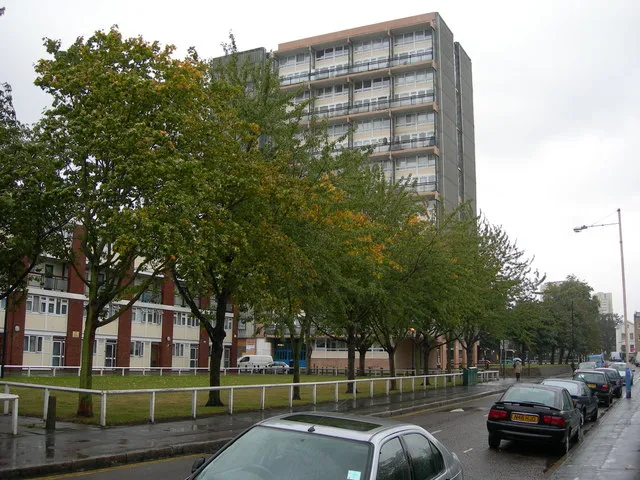
Photo: Danny Robinson, CC BY-SA 2.0, via Wikimedia Commons
In the UK housing market, reputation often runs years behind reality. A road can be dismissed for its postcode, its name, a nearby junction or a lack of Instagram-friendly frontage. Then the fundamentals catch up. At Estates Mitchell, our sales records since 1998 reveal a recurring pattern: micro-locations do not move in value evenly. Some streets lead; others lag; and a third group quietly overtakes expectations once buyers look beyond first impressions.
In 2026, that third group deserves particular attention. Mortgage affordability remains stretched, buyers are more analytical than ever, and the cost of moving means fewer people are prepared to gamble on a postcode alone. The result is a market in which well-built, well-connected roads that were once overlooked are being reassessed — often by buyers who initially dismissed them.
Why perception lags behind price
Postcode snobbery is not a myth. It is a shortcut. Buyers use a postcode, a school name or a nearby landmark as a proxy for quality because proper local research takes time. That shortcut can persist long after the underlying facts have changed. A road once associated with a busy junction may now benefit from traffic calming. A Victorian terrace once considered 'secondary' may now sit within a revised catchment area or a short walk from a new station entrance.
Estates Mitchell has seen this cycle repeatedly since the late 1990s. Streets that were difficult to sell in one decade became competitive in the next, not because the bricks changed but because access, amenity and buyer priorities changed around them. In 2026, the pace of that reassessment appears to have quickened. Buyers are using satellite maps, sold-price data and commute calculators before they book a viewing. They are also more willing to question a road's reputation if the evidence points elsewhere.
The anatomy of a second-glance street
What makes a road worth a second look? In our experience, it is rarely one dramatic feature. More often, it is a combination of quiet strengths: solid construction, generous plots, reasonable parking, mature trees, a cul-de-sac position, or an edge-of-settlement location that offers green space without isolation. Roads with mixed housing stock can also be undervalued because buyers struggle to compare like with like.
Access matters, but not in the way many sellers assume. A road within a ten-minute walk of a reliable bus or rail connection can outperform a more prestigious address that depends entirely on the car. Similarly, a through-road with effective traffic calming can offer more convenience than a quieter backwater with poor pavement links. The key is to assess the road as a place to live, not as a label.
What the data suggests
Our local records show that the gap between asking prices and achieved prices tends to be narrower on roads where sellers have priced realistically from the outset. That is not surprising. What is more revealing is how often second-glance streets attract a higher ratio of viewings to offers once buyers actually visit. In other words, the initial online impression understates the physical reality. When that happens consistently, value tends to adjust.
In 2026, buyers are also more sensitive to running costs. A well-insulated home on an overlooked road can be more attractive than a draughty period property in a favoured postcode. EPC ratings, boiler age and glazing are now part of the first conversation, not the last. Sellers who address these points before listing often find that the road's reputation matters less than they feared.
How buyers can spot an undervalued road in 2026
Start with evidence, not emotion. Compare the price per square foot on the road you are considering with nearby streets that have similar housing types. Look at sold prices rather than asking prices, and check whether the road has a consistent record of modest but steady increases. A road that has lagged for years may be lagging for a reason — or it may be ripe for reassessment.
Then test the practicalities. Walk the road at different times of day. Check parking pressure, pavement width, street lighting and noise. Review the Environment Agency flood map, the local planning portal and the EPC register. Speak to a local agent who knows the micro-market rather than relying solely on online tools. Finally, ask yourself whether the road's drawbacks are permanent or fixable. A dated exterior is fixable; a flight path is not.
How sellers can reposition a second-glance street
If you own a home on a road that buyers have previously overlooked, do not compete on postcode prestige. Compete on clarity. Commission an honest valuation that reflects sold evidence rather than aspiration. Address obvious cosmetic issues that distract buyers online. Provide a buyer information pack covering EPC, planning consents, warranties and service charges. Professional photography and an accurate floorplan will do more for a second-glance street than a glossy description that overpromises.
Timing and pricing also matter. A realistically priced home on an overlooked road can attract competitive interest from buyers who have already been priced out of neighbouring areas. That competition is often the fastest route to a fair price. Estates Mitchell has long argued that local knowledge is not about defending the status quo; it is about recognising when the market is ready to revise its view.
The road ahead
In 2026, the smartest buyers are not simply chasing the most fashionable postcode. They are looking for roads where perception has not yet caught up with reality. That creates opportunity for buyers prepared to do the research and for sellers prepared to present their homes honestly. The second glance, in many cases, is proving more valuable than the first.