The Missing Kerb: How Lost Parking Shapes a 2026 Sale
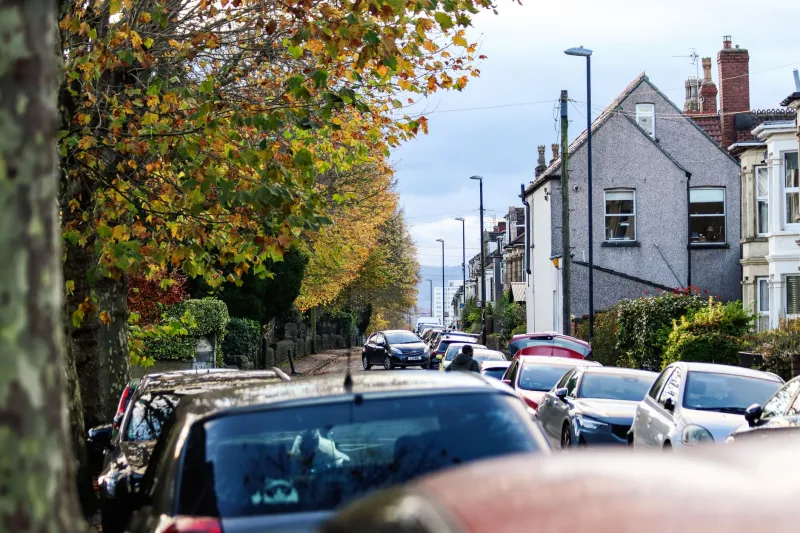
Parking is seldom the reason a buyer arranges a viewing, but it is often the reason an offer stalls. In 2026, with household budgets still finely balanced, the practical arithmetic of where two cars will sit overnight has moved from a background concern to a negotiating point. A garage converted into a study, a front garden paved for low maintenance, or a dropped kerb allowed to lapse can each look like an improvement in isolation. At resale, the same change can read as a missing asset.
The difference between a space and a lawful space
A paved forecourt is not automatically a parking space. For a vehicle to cross a footway or verge lawfully, the local highway authority must have approved a vehicle crossover, commonly described as a dropped kerb. Without that consent, a seller may have created a hardstanding that is convenient in dry weather but vulnerable to enforcement, objection from a future buyer’s solicitor, or a refused mortgage lender’s query.
Sellers should therefore gather evidence early. The relevant documents may include the crossover licence or approval letter, the title plan, any local land charges register entry, and, where a garage has been converted, planning permission and building regulations completion certificates. A buyer’s conveyancer will ask whether the parking is authorised, not merely whether a car has historically fitted there. In 2026, that distinction is being tested more often as local authorities review pavement parking, crossover permissions and controlled parking zones.
Street type matters more than space count
The value of a lost driveway is not fixed. It depends heavily on the street. On a terraced road within a controlled parking zone, one lawful off-street space can carry a noticeable premium because it removes the daily uncertainty of permit bays, visitor vouchers and evening competition. On a suburban cul-de-sac where most houses already have drives and the kerb is unrestricted, the same loss may be felt less acutely.
Family housing tells a different story again. A three-bedroom home in a school catchment area may attract households running two cars, one for the commute and one for the school run. In that setting, losing a driveway can narrow the buyer pool even if the internal accommodation has improved. Buyers with young children tend to value a safe place to unload, store buggies and charge an electric vehicle. A converted garage may add a useful room, but it can also remove the only practical point for a charging cable.
Conservation areas and older streets introduce a further layer. Paving a front garden can alter the character of a terrace, and some councils take a firmer line on hardstanding than sellers expect. Where the street is already tight, a loss of parking may be read as a neighbourhood problem rather than a private one.
The garage conversion trade-off
A garage conversion is often the most defensible version of this trade-off. If the work is properly consented and the resulting room is well finished, many buyers will value the extra living space. The calculation changes when the conversion is informal, when the garage was the only off-street space, or when the street has heavy parking pressure.
Sellers should compare local sold prices rather than relying on a general rule. On a street where comparable houses with drives have consistently achieved more than those without, the conversion may not have added the value the seller assumes. On a street where parking is plentiful and buyers prize ground-floor space, the same conversion may be neutral or positive. The honest approach is to present the property as it is, explain the trade-off, and let the asking price reflect the evidence.
What buyers ask, and what sellers should show
In 2026, buyers are better informed about parking than they once were. They ask whether a space is allocated, whether the kerb is dropped, whether a permit is available, and whether the garage is large enough for a modern car. Sellers can reduce friction by preparing a simple parking file: photographs of the access, the crossover approval, any lease or title references, and a clear note of what is and is not included in the sale.
Where parking has been lost, it is better to address the point directly than to hope it goes unnoticed. If a permit is available, say so accurately and explain the cost and eligibility. If there is nearby unrestricted parking, describe the realistic distance rather than the theoretical one. If the property has no lawful off-street space, do not describe a paved area as a driveway without qualification. A measured description builds trust; an overclaim invites renegotiation.
Pricing the trade-off honestly
The missing kerb is rarely a single dramatic deduction. It is a quiet adjustment that appears in buyer feedback, in the number of second viewings, and in the gap between asking and achieved prices. Sellers who converted a garage or paved a front garden should ask whether the change solved a problem for them or merely moved it to the next owner.
At Estates Mitchell, the consistent lesson from local sales is that parking is valued in proportion to scarcity. Where spaces are contested, a lawful driveway is a genuine asset and should be documented as one. Where spaces are abundant, the absence of a driveway may matter less than the quality of the accommodation. Pricing the trade-off honestly means recognising which street you are on, which buyer you are likely to attract, and what the evidence from comparable sales actually supports.