The Line on the Plan: Selling a Garden With Defensible Boundaries
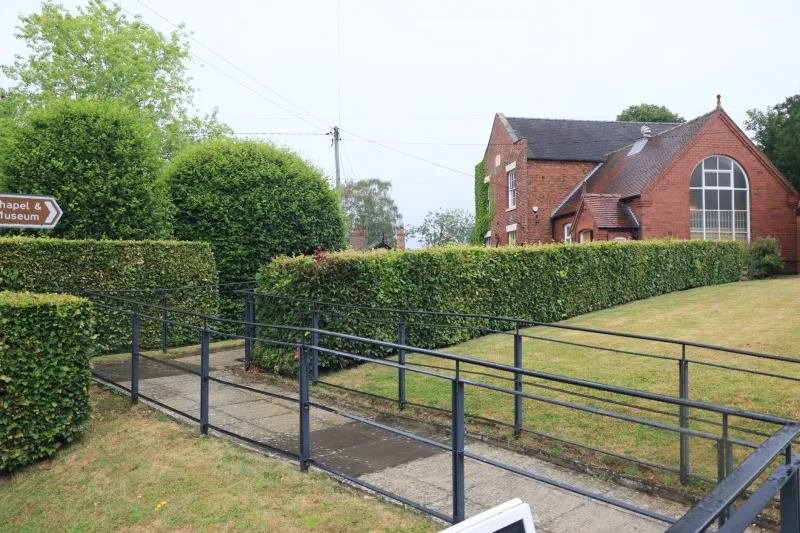
Few parts of a UK home are as casually described, and as closely examined, as the garden boundary. Sellers speak of 'our fence' or 'the hedge we keep trimmed'; buyers see a line that must be explained, insured and, if necessary, defended. In 2026, with conveyancing enquiries more detailed and buyers more inclined to ask for evidence before exchange, the garden boundary has become a quiet test of how well a sale has been prepared.
The starting point is that a boundary is rarely a single fact. It is a relationship between three records: the registered title plan, the deeds and conveyances that preceded registration, and the physical feature on the ground. Where those records agree, the sale proceeds calmly. Where they diverge, the gap becomes a question — and questions at the conveyancing stage have a habit of becoming delays.
The title plan is indicative, not definitive
HM Land Registry title plans are drawn under the general boundaries rule. They show the approximate position of the boundary, usually by a red edging on the filed plan, but they do not normally fix the exact line. A title plan may show a boundary running through a hedge, along the centre of a ditch or at the back of a pavement; it is not a surveying document. Sellers who treat the red line as a precise measurement often create unrealistic expectations, while buyers who treat it as meaningless can miss the one document that will be relied on in a dispute.
Older deeds can be more exact. A conveyance from the 1930s may include a plan with measurements, a schedule of boundary features or covenants requiring the purchaser to maintain a fence. These pre-registration documents still matter. A solicitor will compare them with the title plan and the physical layout, and will ask the seller to explain any apparent inconsistency.
Fences, hedges and the meaning of T-marks
Physical features carry their own grammar. A close-boarded fence, a post-and-rail fence, a brick wall and a hedge are all evidence of where someone has chosen to mark a limit, but none is proof of ownership. The presence of T-marks on a conveyance plan — short strokes on the boundary line — is often read as indicating which side is responsible for maintenance. That reading is useful but not conclusive; T-marks can be ambiguous, omitted or contradicted by later documents.
Hedges deserve particular care. A hedge may be jointly maintained by long-standing arrangement, or it may sit wholly within one title. The fact that a seller has always trimmed one side does not establish ownership, and the fact that a neighbour has never contributed does not extinguish an obligation. Buyers are increasingly alert to the difference between a boundary that is merely convenient and one that is legally defined.
Where boundary disputes begin
Most disputes do not begin with a deliberate encroachment. They begin with a small, unrecorded change: a fence moved half a metre during a replacement, a shed built close to a line that was never surveyed, a hedge allowed to spread, or a gate installed where a right of way was assumed but not documented. Over time the physical position becomes the familiar one, and the deed position becomes a surprise.
In 2026, the enquiries raised in a typical residential transaction will ask whether there has been any dispute or complaint about boundaries, whether any boundary has been moved, and whether there are any informal arrangements with neighbours. A seller who answers these questions carelessly, or who leaves a neighbour's solicitors to raise the issue first, risks losing a buyer's confidence. A seller who answers them accurately, with supporting documents, is in a stronger position.
A pre-listing boundary audit
Before listing, a seller should gather the registered title plan, any pre-registration deeds and conveyances, and any correspondence with neighbours about fences, hedges, drains or rights of way. It is worth walking the garden with those papers in hand and noting where the physical line differs from the plan. Photographs taken now, dated and showing the whole boundary, are more useful than a rushed set taken during a viewing.
Where a fence or hedge is jointly maintained, the arrangement should be described plainly. Where a neighbour has a right of access across the garden, or where a drainage pipe crosses the boundary, that should be disclosed rather than left for a surveyor to infer. Where a boundary feature has been replaced, keep the receipt and a note of the date; where a fence has been moved, obtain a short written confirmation from the neighbour if possible.
Presenting the boundary honestly
The aim is not to produce a perfect boundary but an intelligible one. A seller should be able to say what the title plan shows, what the deeds add, what stands on the ground and what is done in practice. If those four statements diverge, the divergence should be explained before a buyer's solicitor finds it. In a market where buyers are cautious and lenders are attentive to risk, a boundary query that is answered early is a minor administrative point; the same query left unanswered can become a reason to renegotiate or withdraw.
Estates Mitchell has advised sellers across the region since 1998, and the lesson has not changed: buyers accept imperfection when it is disclosed, but they distrust a boundary that seems to have been tidied up only for the brochure. The fence line is a promise, and a promise is easier to keep when the paperwork, the posts and the people on both sides tell the same story.