The Award in the Drawer: Presenting a Neighbour’s Completed Party Wall Works at Sale

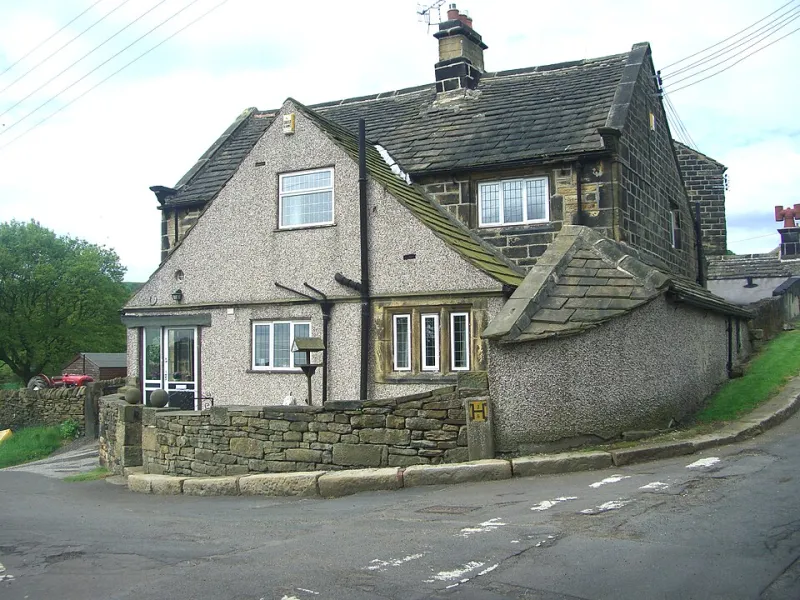
Photo: Daderot, Public domain, via Wikimedia Commons
Completed building works next door seldom disappear from the record when the scaffolding comes down. For a seller in 2026, the relevant question is not whether the neighbour’s project was disruptive at the time, but whether the paperwork now tells a clear and coherent story. Under the Party Wall etc. Act 1996 in England and Wales, adjoining owners can acquire rights and obligations that survive the practical completion of works. In Scotland, the position is governed by common law and title conditions rather than the 1996 Act, so the detail differs. In either jurisdiction, a well-ordered file is more persuasive than a verbal assurance that “it was all agreed”.
Why the file matters after the work is finished
A party wall award is not merely a permission slip. It normally records the works, the appointment of surveyors, a schedule of condition and any provisions for making good or compensating for damage. When a sale is underway, a buyer’s solicitor may raise enquiries about notices, disputes, awards and neighbouring works. A lender’s valuer may note alterations that affect the subject property or its shared structure. The seller who can produce the award, the surveyor correspondence and evidence of completion is in a stronger position than one who can only recall that the works were handled informally.
The absence of paperwork does not necessarily mean that something went wrong. It does, however, invite further questions. A concise, dated record allows those questions to be answered without speculation.
What a useful paper trail contains
A practical sale pack should include the party wall award itself, any schedule of condition, the names and contact details of the appointed surveyors, and correspondence confirming commencement and completion. Letters or emails confirming that snagging or making good has been dealt with are particularly valuable. Photographs taken before, during and after the works can supplement the written record, especially where the schedule of condition is brief.
Where the neighbour’s project also required planning permission or building regulations approval, the decision notice and completion certificate can be useful supporting documents. They do not replace the party wall record, but they help to show that the works were considered through the appropriate routes. If the works affected a shared wall, roof or foundations, structural calculations or drawings may also be relevant. Sellers should keep these documents in a clearly labelled file rather than scattered among general household papers.
What buyers, solicitors and lenders may ask
Buyers rarely begin with a detailed knowledge of the 1996 Act. Their solicitors, however, will usually ask whether notice was served, whether an award was made, whether the award was complied with and whether any dispute remains outstanding. Standard property information forms may prompt disclosure of disputes or complaints. The safest approach is accuracy: a resolved matter described plainly is generally less troubling than an unexplained gap.
Lenders are chiefly concerned with the security for the mortgage. A valuer may ask whether works are complete, whether consents were obtained and whether the property has been adversely affected. A party wall award is not a building regulations certificate, and it does not certify structural adequacy. It does, however, provide evidence of a process. Where a lender asks for further assurance, the seller should take advice rather than attempt to characterise the position more favourably than the documents allow.
Presenting a resolved history as reassurance
A short summary sheet at the front of the pack can be helpful. It might list the address, the nature of the neighbouring works, the date of the award, the surveyors involved, the completion date and any making-good that followed. The summary should point to the underlying documents, not replace them. Neutral language works best: “party wall award dated [date]”, “works completed and confirmed by surveyor correspondence dated [date]”, and “no outstanding items noted” are clearer than assurances that the matter was “not a problem”.
Sellers should avoid presenting the file as a defensive exercise. A completed party wall process is a normal feature of urban and suburban property ownership. Many buyers will have encountered similar records before. The aim is to show that the works were managed, documented and concluded, not to imply that the neighbouring project was insignificant.
Common pitfalls to resolve before marketing
Missing awards, informal consent and incomplete correspondence are the usual weak points. If the award cannot be found, copies may be available from the appointed surveyors or the building owner. If works continued beyond the scope of the award, or if later alterations were made without updating the record, that should be addressed before the property is marketed. Outstanding damage claims or unresolved making-good should not be left to emerge during a buyer’s enquiries.
Sellers should also be careful not to conflate different documents. A party wall award is not a planning consent, a building regulations certificate or a warranty. Each answers a different question. Presenting them together, clearly labelled, helps buyers and their advisers understand what has been resolved and what remains outside the party wall process.
A calm conclusion
A neighbour’s completed works need not cast a shadow over a sale. The presence of an award, surveyor correspondence and completion records demonstrates that a statutory process was followed and brought to a conclusion. Sellers who organise that material before viewings begin can answer enquiries promptly and present the construction history as part of the property’s ordinary records. Where the paperwork is incomplete or the facts are complex, professional advice should be taken before marketing. Clarity, not concealment, is the enduring principle.