Beyond the Boundary: Presenting a View That Belongs to Someone Else in 2026
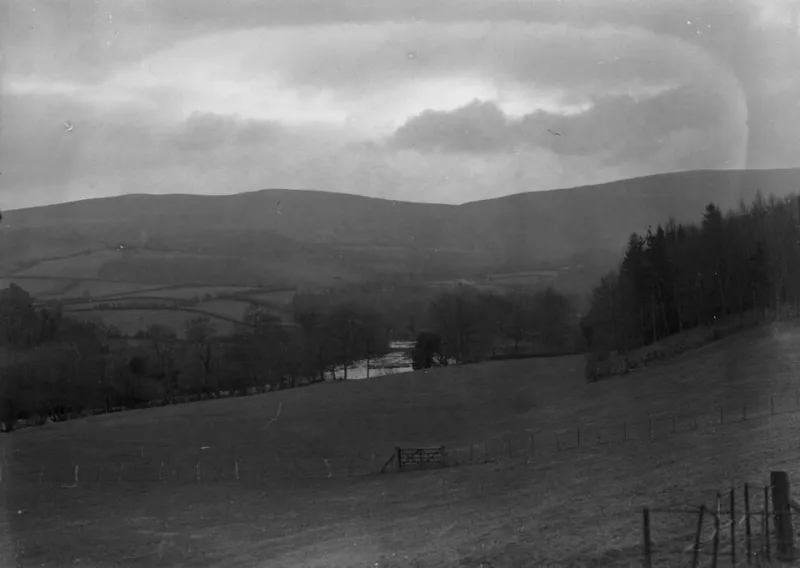
Photo: Percy Benzie Abery, CC0, via Wikimedia Commons
A broad outlook across fields, woodland or an unbuilt parcel of land can be among the most persuasive features of a British home. It is also one of the least secure. The land that supplies the view usually sits outside the seller's title, and the benefit is visual rather than legal. In 2026, buyers and their advisers are well placed to test that distinction, which is why sellers should present an outlook as an existing amenity rather than a permanent entitlement.
What a borrowed view actually is
A borrowed view is the visual benefit a property enjoys over land it does not own. It may be farmland, woodland, a neighbour's garden, a school playing field, a golf course or a plot that has so far escaped development. The view may feel integral to the house, but it is not automatically part of the property's legal assets.
In England and Wales there is no general right to a view. A title may include covenants or easements that restrict what can happen on neighbouring land, and a planning authority may have policies that make development unlikely. Neither arrangement amounts to a personal guarantee. Restrictive covenants can be varied, breached or found to be unenforceable, while planning policy can change through a new Local Plan, an appeal decision or revised permitted development rights. A view is therefore best described as a feature of the current setting, not a permanent attribute of the home.
The checks a buyer may make
A diligent buyer will look beyond the photograph. Solicitors and conveyancers commonly examine the title plan and register, local land charges, planning history and any covenants affecting neighbouring land. A buyer may also search the Local Planning Authority's online register for applications and appeals, review the adopted Local Plan and inspect the brownfield register where relevant. For a view over woodland, questions may arise about Tree Preservation Orders or felling licences; for farmland, about agricultural use, stewardship schemes and future allocation; for an unbuilt plot, about outline permission, permission in principle or site allocation.
The ownership question matters as much as the planning question. A buyer may use HM Land Registry's map search to identify the registered proprietor of the land beyond the boundary fence. If the land is unregistered, the trail may be less straightforward, but the principle remains: the seller should not imply control that they do not have. Where the outlook depends on land in third-party ownership, the buyer is entitled to know that the view is enjoyed by circumstance rather than by right.
Presenting the outlook honestly
Marketing should describe what can be seen today, from where, and under what conditions. Phrases such as 'open aspect over adjoining agricultural land' are defensible; 'protected views forever' are not, unless a legal mechanism genuinely supports them and has been checked. Photographs should show the outlook from the rooms that benefit, not only from a drone position that a buyer cannot occupy. Seasonal variation should be acknowledged: a winter view through bare trees may be broader than the summer outlook, and a first-floor window may see more than the garden gate.
If the seller knows of a planning application, a consultation or a change of use on neighbouring land, it is prudent to disclose it early. The property information form gives buyers an opportunity to ask about notices and disputes, but material information can emerge before that stage. Estate agents have a responsibility not to mislead, and a seller who is later found to have concealed a known threat to the view may face difficulty in the transaction even where the legal position is defensible. Early disclosure is rarely fatal; late discovery often is.
Pricing the amenity, not the prospect
A view can add value, but the premium should be supported by evidence. Comparable sales of homes with similar outlooks are more helpful than an assumed percentage uplift. The valuer and the market will assess how permanent the outlook appears, how likely it is to change and how much the buyer is willing to pay for uncertainty. A seller should separate the value of the view as it exists today from the hope value of what might happen to the land in future. Pricing in a prospect that could change is a common route to a stale listing.
Where the outlook is vulnerable, the asking price should reflect that vulnerability rather than ignore it. A home beside a field with no planning history may command a modest premium over an otherwise similar property facing a road. A home beside land already allocated for development may command very little, because buyers will price the disruption and the eventual loss of outlook. The distinction is not pessimistic; it is the basis of a credible sale.
Documents and the sales process
Sellers can help by assembling a simple view file: the title plan, any relevant covenants or easements, planning correspondence, Tree Preservation Order information if applicable, and copies of searches already obtained. This is not a substitute for the buyer's own due diligence, but it demonstrates good faith and reduces the scope for misunderstanding. The solicitor should be instructed early, particularly where the outlook depends on a private agreement or a planning condition on another site.
Above all, the particulars should remain consistent with the documents. If the view is described as rural, the buyer should not discover a live application for a distribution depot in the searches. If the outlook is described as unspoilt, the seller should be ready to explain what that means and what it does not. Accuracy protects the seller's position and gives the buyer confidence in the rest of the information provided.
A borrowed view is a pleasure, not a guarantee. Sellers who present it with care, disclose what they know and price the amenity rather than the possibility will usually achieve a more reliable outcome. Estates Mitchell has advised homeowners and movers on the subtleties of local settings since 1998, and the principle remains unchanged: describe the outlook you have, not the one you hope to keep.