The Street as Co-Owner: Selling a Home Inside a Conservation Area in 2026

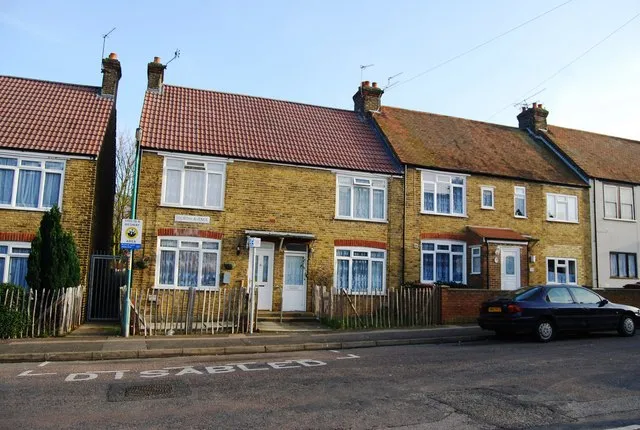
Photo: Shadow Ayush, CC BY-SA 4.0, via Wikimedia Commons
Conservation area status is often described as a compliment paid to a neighbourhood. In practice it functions more like a covenant held collectively: the character of the street is treated as a shared asset, and every owner within the boundary holds a stake in it. For a seller in 2026, that has two consequences. The first is that the designation should be priced and marketed as an enduring benefit. The second is that a buyer's solicitor will ask questions a conventional purchase never raises, and the sale proceeds most smoothly when those questions have answers already prepared.
Designation Is Not Listing
The most common misunderstanding encountered at the point of instruction is a conflation of two separate regimes. A listed building is protected because of its individual architectural or historic interest, and any alteration affecting its character requires listed building consent. A conservation area is protected because of the quality of the whole environment — the rhythm of frontages, the materials, the roofline, the trees, the street furniture and the spaces between buildings. Individual houses within it may be entirely ordinary.
The practical effect is that the designation reaches further than many owners assume. It is not limited to the elevation visible from the road, and it is not limited to the fabric of the building. Boundary walls, gates, hardstanding, rear extensions and, in some authorities, even the colour of a front door can fall within the scope of local policy. A seller who has never applied for permission may still have obligations that a purchaser's conveyancer will want to see discharged.
What Article 4 Directions Change
Permitted development rights are the automatic freedoms that allow certain modest works without a planning application. In a conservation area, several of those freedoms are already withdrawn: the demolition of most buildings and the cladding of elevations, for example, normally require consent.
An Article 4 direction goes further. It removes specific permitted development rights that would otherwise survive, and it is the reason a householder in one conservation area can replace a window without formality while a neighbour two streets away cannot. Directions are not uniform across the country, and they are amended from time to time. The only reliable starting point is the local planning authority's own record, checked against the address rather than the postcode, together with the planning history held on the authority's public register.
Where a direction is in force, works such as replacing windows or doors, rendering or painting an elevation, altering a roof covering, installing a satellite dish or erecting a small outbuilding may each require an application for planning permission — sometimes a householder application, sometimes a bespoke submission with drawings and materials samples. Some authorities also operate an informal design guidance note covering window proportions, glazing bars and the finish of rainwater goods. Compliance with that guidance is not itself a legal requirement, but it materially improves the prospect of consent being granted.
Solar, Satellites and Small Additions
Renewable technology deserves particular attention. Roof-mounted solar panels have their own permitted development rules, but in a conservation area several of the standard allowances narrow: panels on the principal elevation, or on a wall facing a highway, are commonly restricted, and the local authority may object to their visual effect on the roofscape. A seller who installed panels some years ago without checking should establish whether consent was required and, if so, whether it was obtained.
Satellite dishes, air source heat pumps and electric vehicle charging points raise similar questions. None of these is inherently incompatible with a protected street; the difficulty arises when their installation has not been documented.
Trees and the Six-Week Rule
Any tree within a conservation area enjoys a measure of protection equivalent to a tree preservation order in one important respect: notice of intended works must be given to the local authority, which then has a period to consider whether to make a formal order. Felling, lopping or significant pruning without that notice can expose the owner to enforcement action, and a buyer's solicitor will ask about works carried out during the seller's ownership. Where trees are close to the property, the purchaser's surveyor is also likely to raise subsidence and root-protection questions, so records of any historic works, together with the authority's response, are worth locating in advance.
Proving What Has Been Done
The strongest preparation a seller can make is an evidence file. In practice this means assembling:
- a copy of the planning history for the address, taken from the authority's online register;
- all decision notices, including refusals, which now form part of the public record and may be visible to a buyer regardless;
- completion certificates for building regulations work, which is a separate regime from planning and does not cure a missing planning consent;
- a lawful development certificate, where one has been obtained, which is the cleanest possible evidence that a use or work is immune from enforcement;
- correspondence with the conservation officer regarding materials and finishes;
- records of tree works and the notice given.
Where works were carried out by a previous owner and no consent exists, the position should be investigated rather than concealed. Planning enforcement is subject to time limits that vary according to the nature of the breach, and immunity can sometimes be established. Indemnity insurance is available in some circumstances but is not a universal solution, and lenders increasingly scrutinise policies that do not address the specific breach. Taking advice from a solicitor with planning experience at the point of instruction is far cheaper than discovering the difficulty three weeks before exchange.
Presenting a Protected Home
Marketing a conservation area property calls for restraint and specificity. Buyers drawn to such streets are usually alert to character, and vagueness undermines rather than protects that interest. An accurate description of the designation, the Article 4 position and the consents in place will reassure rather than deter; uncertainty is the greater deterrent.
The photographic approach should show the setting as well as the house — the roofline, the boundary and the relationship to neighbours — because that context is the asset being sold. Internally, where a sympathetic scheme has been executed with consent, such as timber sash windows or a traditionally finished render, that is a selling point and should be named as such. Buyers paying a premium for a protected street expect the details to survive scrutiny.
A Note on Pricing
Conservation area status tends to support values over the long term by limiting the density and appearance of surrounding change. It also narrows the buyer pool slightly, because the property attracts purchasers who value continuity and deters those who wish to alter externally. A realistic asking price reflects both effects: the premium that character commands, tempered by the smaller group of buyers for whom the restrictions are acceptable. Comparable evidence drawn from within the designated area will be more persuasive to a surveyor than evidence from the wider postcode.
Handled with preparation, a conservation area sale need not be slower or more complicated than any other. The difficulty arises almost entirely where the paperwork has been left to the last moment. Assembling the record early turns a protected street from a question mark in a buyer's mind into precisely the reason they wish to live there.
Estates Mitchell has advised sellers in protected streets since 1998. Instructions are taken on a no-obligation basis, and a member of the team will review your property's consent history before a figure is discussed.