The Convenience Test: Five Everyday Anchors That Shape Local Values
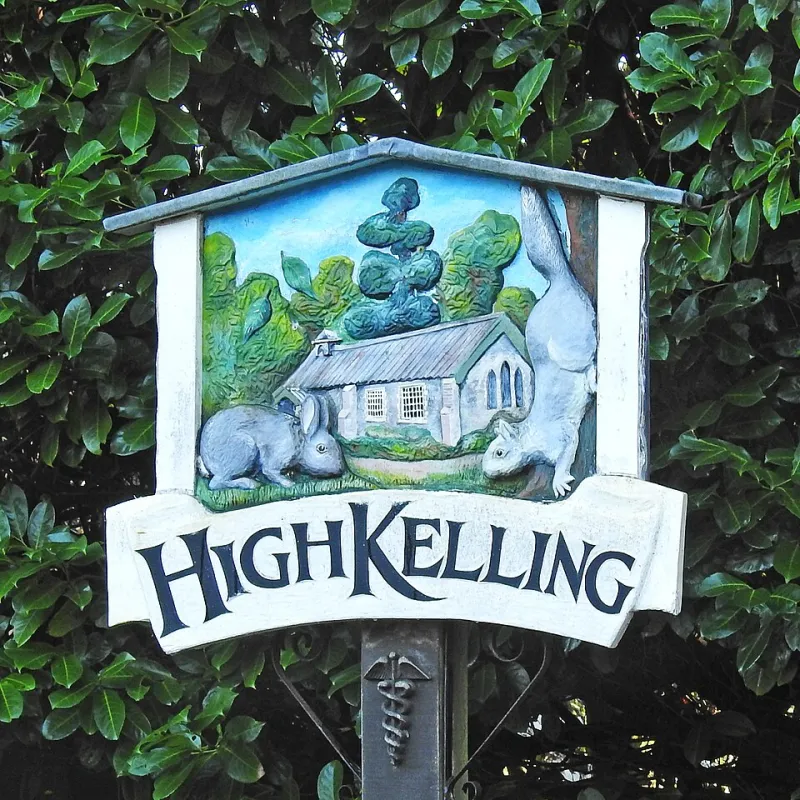
Photo: Adrian S Pye , CC BY-SA 2.0, via Wikimedia Commons
Estates Mitchell has been listing property since 1998, and the files are consistent on one point: purchasers rarely buy a postcode. They buy a routine. The prestige of a location draws the enquiry, but the decision is usually settled by more ordinary considerations — whether there is milk within walking distance, whether the 8.15 bus exists, whether a child can be enrolled in September. What follows is our attempt to set those considerations in some order, drawn from the everyday questions buyers put to our negotiators rather than from any analysis of road-by-road values.
Why the everyday outranks the aspirational
The household composition of the market has shifted. Hybrid working has made the daily commute a weekly one for many buyers, which reduces the premium attached to a fast rail connection and increases the premium attached to everything within a ten-minute walk. Downsizers, meanwhile, are frequently trading a large garden for a viable high street, and they inspect a village with the eye of someone who intends to use it on a wet Wednesday. Prestige matters at the search stage. Convenience matters at the offer stage.
One: the shop that opens seven days
The single most reliable indicator is a village shop that sells bread, milk and a newspaper, opens before eight, and carries a post office counter if fortune allows. Buyers measure it in minutes on foot, not miles by car; a farm shop three miles distant is a weekend outing, not a convenience. Signs of health include a delivery van at the door, a working noticeboard and a till that takes cards. Reduced hours, thinning shelves and a hand-written sign about staffing are the warnings, and experienced purchasers read them accurately.
Two: the café with local trade
The café is the least discussed and most diagnostic amenity on any high street. A room with four tables and a steady mid-morning trade from parents, dog walkers and laptop workers tells a buyer that the settlement has a functioning daytime population. It is also the first business to close when a village thins, which makes it a leading indicator rather than a lagging one. Buyers who work from home increasingly treat a walkable café as part of the property's usable floor space.
Three: a bus that actually runs
The question has changed. Buyers no longer ask whether there is a bus; they consult the timetable on their telephone while standing in the hallway. What they are looking for is frequency and the last service of the evening, not the existence of a route. An hourly service to a town with a station is worth more than a twice-weekly connection to a destination nobody visits. Sunday and school journeys matter disproportionately to older purchasers and to families respectively, and both groups will check before committing.
Four: the primary school with a waiting list
A waiting list is a rough proxy for demand, and demand is a rough proxy for the sort of catchment that holds its value. It should be read with care. A small admission number can produce a waiting list as readily as genuine popularity, and the published admission criteria — distance, siblings, faith — determine whether a buyer's house is realistically inside the gate. The figure purchasers find most useful is the distance of the last place allocated in recent years, and a seller who can supply it saves everyone a fortnight of uncertainty.
Five: the pub that serves food
A wet-led pub is an asset to some buyers and a noise nuisance to others. A pub with a food trade, however modest, anchors an evening economy: it supports the shop's lunchtime trade, gives the village somewhere to gather, and signals that the settlement is not merely a dormitory. Conversions of pubs to residential use are read by purchasers as a verdict on the area, whether fairly or not. Where a pub has been recently taken on and refitted, buyers notice.
What does not count
A gastro pub that requires booking three weeks ahead serves a different market. Amenities described in particulars as nearby, without a distance or a walking time, are treated by experienced buyers as an admission that nothing is close. A village hall hosting one summer fete, a petrol station on the bypass and a National Trust car park are not, in any meaningful sense, convenience. Nor is a shop that closed last spring but remains on a website.
Presenting an area honestly
For sellers, the lesson is documentary rather than rhetorical. Supply the bus route number and the timetable. Note the walking time to the shop door, measured by a person rather than a map. Give the school's admission number and last allocated distance. For buyers, the corresponding discipline is to visit twice: once on a weekday morning, when the shop and the café reveal whether they are real, and once on a Friday evening, when the pub and the traffic do the same. A single Saturday viewing flatters almost every village in the country.
The limits of the index
It would be dishonest to suggest that amenities can carry a price on their own. A shop does not repair a roof, and no quality of café compensates a purchaser for a failed damp course. The effect of these five anchors is to widen the pool of buyers prepared to consider a property and to shorten the time it spends on the market; it is not to override condition. Nor is the effect uniform within a parish. A house four hundred yards further from the green may sit outside the comfortable walk, and purchasers treat that distance precisely.
Taken together, the five form a reasonable test for anyone weighing an unfamiliar area against a familiar postcode. They will not tell you what a house is worth to the pound. They will tell you, with some accuracy, how many people will want to live in it.